
Murray County Arrest Records and Court Charges
A Murray County arrest record is the account of an arrest itself. It names the person taken into custody, the arresting agency, and the date, along with the booking that follows. Most arrests in the county run through the Murray County Sheriff's Office. An arrest does not set the formal charges, though. Once a person is booked, the District Attorney reviews the case and decides which counts to file. Those filed counts become the court charge record, kept by the Court Clerk inside the District Court case file. So the arrest is one event, and the charges are a separate step that the prosecutor controls.
The two records live in different places. Booking detail, custody status, and bond sit on the jail side, and the Murray County inmate records page is the better route for that roster. The court charges after arrest sit on the court side, where each count is tracked as the case moves. Filed charges can be amended, reduced, or dropped before any verdict. For the full case file, pleas, and the final outcome, the Murray County criminal court records page carries the rest of the story. The arrest alone never confirms what was charged.
Charges Filed After a Murray County Arrest
The court charge record begins with a charging document. After an arrest, the District Attorney for District 20 decides whether to file and what to file. District 20 covers Murray plus Carter, Johnston, Love, and Marshall counties, and District Attorney Melissa Handke runs the Murray County office inside the courthouse at 1001 W. Wyandotte Avenue in Sulphur. The arresting deputy reports the arrest, but the prosecutor, not the deputy, controls the formal counts. Charges reach the court through one of three documents, and each one opens a case.
| Complaint | Information | Indictment | |
|---|---|---|---|
| Filed By | Officer or prosecutor | Prosecutor (DA) | Grand jury |
| Common For | Misdemeanor cases | Many felony cases | Serious felony cases |
| What It Is | A sworn accusation | The DA's formal charge | A grand jury charge |
| Starts the Case | Yes | Yes | Yes |
How to Find Murray County Charges
Filed charges show up in the District Court case once the clerk dockets them. The two main public search tools are OSCN and ODCR. Booking detail is not on these docket systems, so the jail roster channel covers that side instead. To pull filed charges, work through the court search step by step.
- Open the OSCN docket search and pick Murray County District Court from the court list.
- Search by the defendant's name, or enter a case number such as CF-2024-1 for a felony or CM-2024-1 for a misdemeanor.
- Open the case and read the charge list, where each count appears with its label and statute.
- Check each charge's current status, since counts can change after they are first filed.
If a case does not appear on OSCN, switch to ODCR and choose Murray in the court list, because some participating courts post cases there. For certified copies or older files, call the Court Clerk at 580-622-3223 or visit the courthouse during business hours.
Note: The District Court docket, not the arrest alone, is the authoritative place to confirm which charges were actually filed in a case.
Murray County Charge Status Explained
Charges rarely stay frozen. As a case moves, the prosecutor can amend a count, reduce it, add one, or drop it, and a judge can dismiss counts. The docket records each change with a dated entry. So the current status matters as much as the charge first filed, and reading it wrong can give a false picture of a case.
| Status | What It Means |
|---|---|
| Filed / Pending | The count is filed and active while the case is open. |
| Amended | The charge has been changed, often to a different count or degree. |
| Reduced | The charge has been lowered to a less serious level. |
| Dismissed | A judge has ended the count, with or without prejudice. |
| Nolle Prosequi | The prosecutor has chosen to drop the count. |
| Disposition | The final result, such as a plea, verdict, or dismissal. |
Charge Codes and Severity Levels
Each charge points to a specific statute, and that code sets the severity. Oklahoma sorts crimes into felonies and misdemeanors, with lesser matters handled as citations or city ordinance cases. A felony carries the heaviest exposure. A misdemeanor is less serious but still a crime. One arrest can spin off several separate counts, so a single booking might produce a felony count, a misdemeanor count, and a traffic count in the same case.
The code also signals where the case belongs. City ordinance tickets route to Sulphur or Davis Municipal Court, while state crimes route to the Murray County District Court. Reading the statute number next to each count is the fastest way to gauge how serious a charge really is.
Note: One arrest can lead to several charges, and each count can carry its own status, level, and outcome on the same docket.
Charges vs Convictions in Murray County
Being charged is not the same as being convicted. A charge is an accusation, and the person stays presumed innocent until the case ends. A conviction comes only after a guilty plea, a no-contest plea where allowed, or a verdict. The charge record can list counts that were later dropped, so it should never be read as proof of guilt.
| Charge | Conviction | |
|---|---|---|
| Stage | Accusation | Plea or verdict |
| Burden of Proof | Probable cause | Beyond a reasonable doubt |
| What It Means | A count has been filed | Guilt has been established |
| Public Record | Yes | Yes |
Statewide Charge Lookups for Murray County
A single county docket shows one court's cases. For a broader view, the Oklahoma State Bureau of Investigation runs a name-based criminal history portal called CHIRP. It pulls reported charges and dispositions from across the state, not just Murray County. A search on the OSBI CHIRP portal is the right move when you need a statewide record rather than one case file.
Court dockets and a CHIRP report serve different needs. Use the docket to confirm a specific filed charge and its status. Use CHIRP when you want a statewide criminal history compiled in one place. Under the state's open records law, 51 O.S. §24A.8 requires law enforcement agencies to release basic arrest and incident information, though investigative details can be withheld.
Note: A CHIRP report compiles statewide criminal history, while a docket search confirms a single filed charge and its current status.
Federal Charges Beyond Murray County Court
Not every charge after an arrest lands in county court. Federal crimes are prosecuted by the United States Attorney's Office for the Eastern District of Oklahoma, which covers Murray County. Those charges and cases run through the federal court system, separate from the District Court docket.
The office that handles federal prosecutions here is the U.S. Attorney for the Eastern District of Oklahoma.
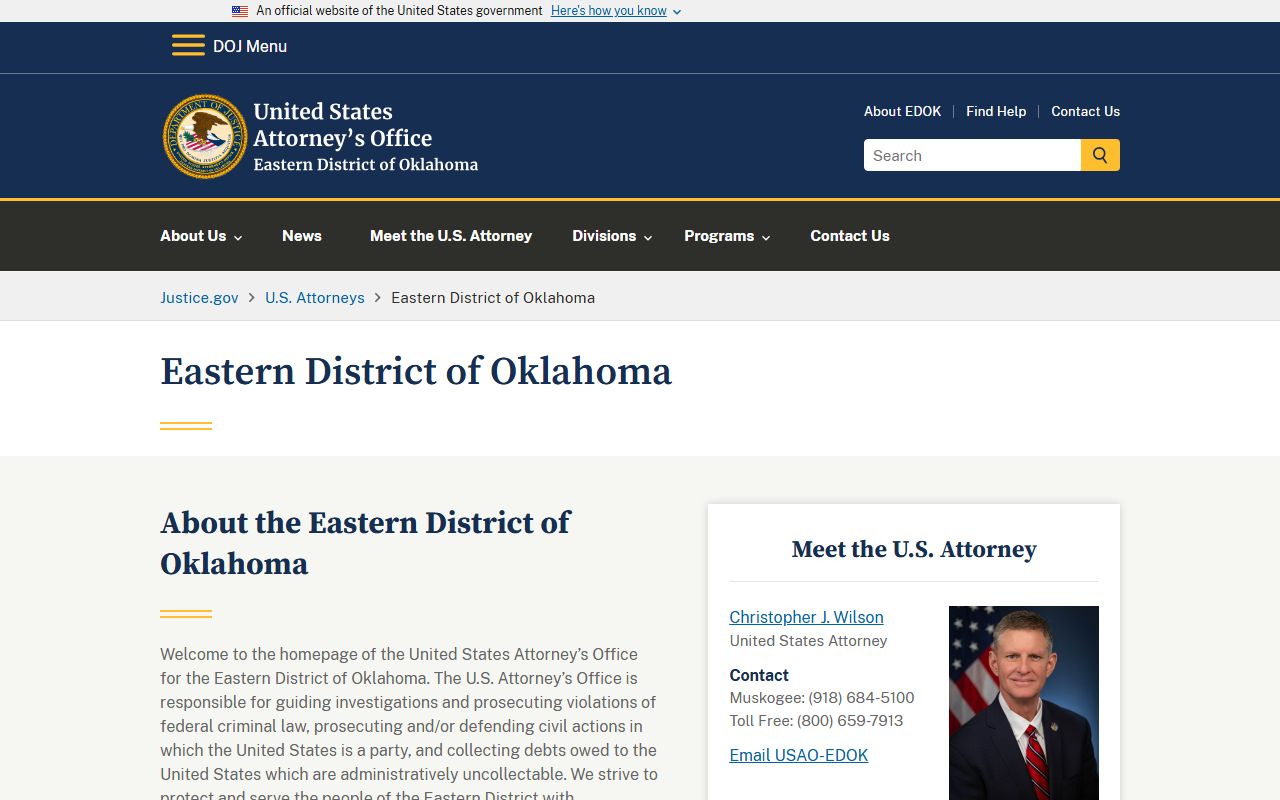
Federal counts filed there do not appear on OSCN or ODCR, so a county docket search will never show them. Custody splits between systems as well. A person held after a county arrest sits in the local jail, while someone sentenced on federal charges moves into the federal prison system.
Federal custody can be checked through the Federal Bureau of Prisons inmate locator.
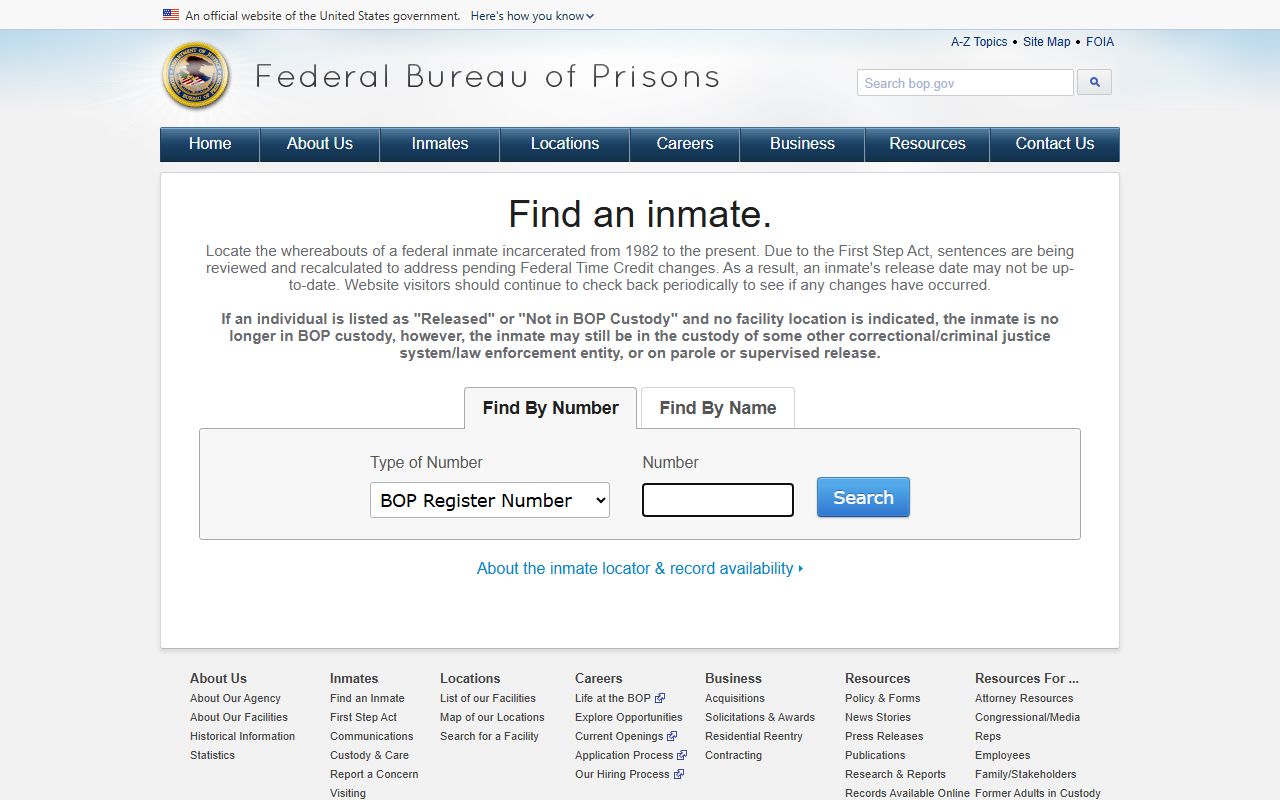
That locator covers people in federal custody, not those booked into the Murray County jail. It will not list a recent local arrest or a pending county charge.
Free Federal Case Research
Federal records usually cost money to pull, but a free option exists for opinions and many dockets. It does not replace the official federal system. Still, it helps when you want to read a ruling without a paid account.
One free research tool is CourtListener, which posts federal and state court opinions and some dockets.
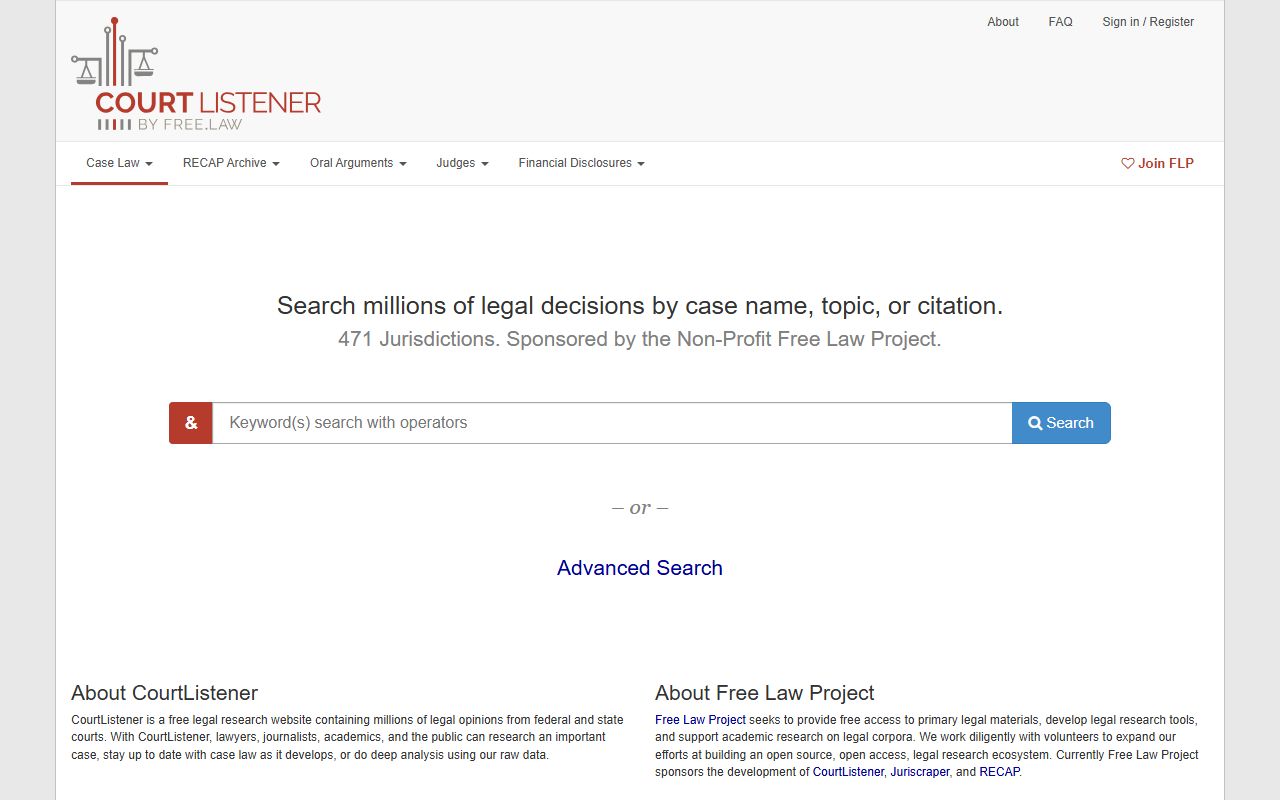
It is a research aid for available records, not the place where Murray County charges are filed or confirmed. For a county charge, the District Court docket stays the source of truth.
Sealed and Expunged Charge Records
Some charge records leave public view. Oklahoma law lets qualifying records be sealed through expungement, which hides them from ordinary public searches. A sealed record is not advertised as destroyed; it is removed from the public docket. Eligibility depends on the case result, the offense, waiting periods, and whether all fines and conditions are complete.
| Sealed | Expunged | |
|---|---|---|
| Visibility | Hidden from public view | Treated as if it never existed |
| Law Enforcement | Limited access stays | Very limited access |
| Set By | Court order | Statute and court order |
Oklahoma's expungement rules sit in 22 O.S. §18, which defines when criminal and related civil records can be sealed and what that sealing does.
Restricted Charge Records in Murray County
Some charges never reach the public docket at all. Juvenile charges are generally closed, and access may require party status, attorney status, or a court order. Charges tied to an open investigation can be held back. Dismissed or sealed counts may show only a limited entry or nothing. Adoption and mental health matters carry their own restrictions.
When the public portal shows nothing, that does not always mean no charge exists. The record may be sealed, juvenile, or under a protective order. In those cases, the Court Clerk or a court order is the only route, and public staff may decline to share details.
Note: A blank result on OSCN or ODCR can mean a case is sealed, juvenile, or restricted rather than that no charge was ever filed.
Murray County Background Check Notes
People often check arrest and charge records before renting, hiring, or lending. A casual docket search and a formal background check are not the same thing. A formal check that affects credit, employment, housing, or insurance must follow the federal Fair Credit Reporting Act and use a regulated agency. A quick look at a public docket is not that.
For booking and custody questions tied to a recent arrest, the Murray County Sheriff's Office at 700 W. 10th Street in Sulphur is the direct contact, and its phone line is 580-622-5106. For the filed charges themselves, the District Court docket stays the authoritative source.
Important: Murray County Court Records is not a consumer reporting agency under the FCRA, and its information cannot be used for credit, employment, tenant, or insurance decisions.